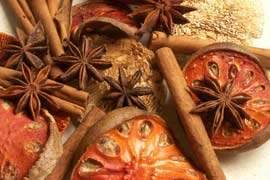
Making Potpourri
The fixative is a vital element in a potpourri recipe.
Some fixatives you could use are powdered orris root, oak moss, cellulose,
ground gum
benzoin or fiberfix .
The fixative absorbs and
retains the volatile scented essences. Essential oils or fragrance oils are used to reinforce
the natural perfumes and to boost the scent. Without adequate
fixative the life goes out of potpourri very quickly.
Include other petals of flowers like lavender,
tulips, freesia and marigolds for added color and fragrance. Ingredients
such as dried citrus peel, seeds, bark and tiny pinecones add variety to the
texture and character of the potpourri. Small, whole dried flowers like baby
rosebuds, dried jasmine buds and Santa Cruz oregano buds give depth and variety of size. Potpourri made only with petals
tends to look like textured fabric. While there is nothing wrong with this,
(rainbow like layers of different kinds of flowers can be very beautiful),
combining petals with other floral material gives a more three-dimensional
result.
Originally, potpourri was stored in closed
ceramic jars which were opened when people used the room. The jars were
placed near a heat source, so the perfume would expand in the warm air and
fill the room with fragrance. When the people went out, the lids went back
on. Nowadays, the beauty of potpourri is also considered to be part of its
charm. Displayed in various ways, dried petals, whether scented or not, can
be layered in glass containers, apothecary jars, placed in baskets, decoupage boxes, ceramic
or silver dishes.
A little potpourri can go a long way if you layer
it over a base of floral foam, moss or tissue paper. Store the bulk
of your recipe in a closed container and sprinkle out a little at a time on
a need to replenish basis. The fragrance lasts longer and the visual impact
is the same.
Roses
Show someone a rose and the natural impulse is to
close the eyes and drink in the perfume. The appeal of roses is universal;
they are perfect in every way. Roses hold their color and scent throughout
the life of the petals, and are readily available in large quantities. They
make a wonderful base for potpourri.
Roses produce perfume in minute glands located on
the surface of the petals. Geraniol, a volatile oily liquid, is the primary
perfume, although more than a dozen other compounds may combine with it to
produce varying scents.
Some fragrances are linked to color. The basic rose
scent is found in red and pink roses. Subtle scents of violet, orris and
nasturtiums are found in white and yellow roses. Clove, tea, citrus and
fruity scents are linked to orange-tinted roses. Combinations of these
scents are common and additional scents can be found in other varieties of
roses. For instance: the Hawaii rose, tuberose, produces a raspberry scent. Lesser
scents like parsley, wine, honey, anise, hyacinth, jonquil,
lily-of-the-valley, bay and bananas are found in other scented beauties.
Some roses have interesting traits. Modern hybrid
tea roses, which are usually bred for form, color, substance and resistance
to disease are found lacking in perfume. This is because fragrance in roses
has a recessive character. On the other hand some scentless hybrid roses
impart fragrance to their progeny. The oil extracted from 32,000 damask
roses produces one ounce of the legendary essential oil, Attar of Roses. The
deep pink Kazanlik rose releases such intense perfume that the fragrance
exterminates insects such as aphids within miles of the rose fields. The
fragrance of the Rose of Miletus increases when the petals are dried.
Basic
recipe for potpourri
(Yields one quart)
• 3 Cups pink
rose petals
• 3 Cups red rose
petals
• 2 Cups miniature
rosebuds
• 2 Cups lavender
• 1 Cup rose leaves
• 2 Tablespoons
powdered orris root (fixative) or fiberfix
• 15 Drops rose oil
1.
Spread the fresh petals on a mesh screen or on a large tray; place them in a
warm, dry place, and stir or spread them around a little everyday until they
are dry. Put dried petals in a large glass or metal bowl.
2.
Add a fixative such as powdered orris root, oak moss, cellulose,ground gum
benzoin or fiberfix. Use a ratio of two tablespoons of fixative to about four cups of
dried material. Add the essential oils and mix with your hands.
3.
Place the mixture in a paper bag and seal the top with clothespins or clips.
Turn the bag over several times to distribute the fixative. Store it away
from direct sunlight, and allow the mix to season for four to six weeks.
Shake up the bag from time to time.
4.
When the potpourri is "seasoned" place in open containers in warm
places. Add a few drops of essential oils and mix with your hands from time
to time as the fragrance diminishes.
Potpourri Projects
Small packets of potpourri can find a home in
lingerie and sweater drawers, mixed in with linens, in the folds of clothing
inside suitcases, on coat hangers in the closet, at the party table as
favors... almost anywhere a fragrant perfume is invited.
Potpourri bags used for linens look good in crisp
stripes and fresh colors. Those placed among lingerie and delicate clothes
can be made of satin, lace or silk. Use readymade lace handkerchiefs for a
quick, fragrant fix.
See our drawstring organza sachet bags ,
organza fabric by the bolt
, tulle and ribbon. Bulk discounts available.
Continue in Floral Design Instruction with How to blend your own potpourri mix