Your Cart is Empty


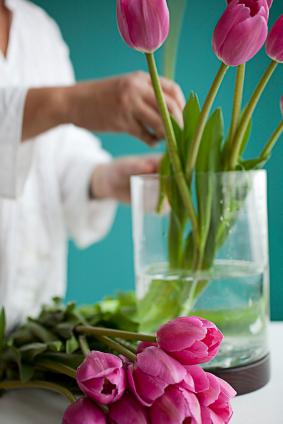
DIY Preparing Containers For Your Arrangements
Preparing Containers for floral arrangements.
Just about anything can be used as a vase for either fresh, silk or dried flowers. Start collecting containers of all shapes and sizes: Shallow bowls, cylinders, compotes, goblets, trough shapes, oval containers, baskets ... look for the unusual. Choices can range from a tiny shell for a miniature arrangement to a large stone urn for an expansive room or office. Flea markets and garage sales have a variety of bizarre and interesting vase possibilities. Clay pots are a natural for casual, all-purpose containers. If you are working with clear glass vases get creative. Add fruit, , , or .

If the arrangement will be viewed at dusk or in the evening -light it! Use that you can set under the vase (battery operated) or drop some in the water to light it. You can even use . If you place them under clear vase gems or they will not be seen in the daytime but as the lights lower each bowl will have color. Don't forget to crack the necklace before you put them in the vase and add the arrangement. Good glow necklaces last for 6-8 hours.

For an evening event put in the vase. The battery pack stays out or the water and the plastic wire goes in. Looks great! Containers need to complement the setting and be consistent with the atmosphere of the room. Baskets provide an informal, country feeling. Brass, copper, silver, wrought iron and pewter add a distinctive flavor. Goblets, wineglasses, glass bricks and crystal add to the formality of an arrangement. Be creative. Look in the plumbing department of your local hardware store. PVC pipes come in a variety of interesting shapes. They can be glued to a wooden base and used for silk and dried arrangements.
If the vessel isn’t waterproof set a glass or a paper cup inside. Clear vinyl liners come in a range of sizes and can easily be trimmed to fit a variety of shapes. Valuable pots and vases should be lined with more permanent liners made out of Mylar to protect them and to avoid the need for regular cleaning. Unglazed pottery and ceramic vases can either be treated with waterproof sealant, or they can be fitted with a plastic liner. To waterproof your container, brush on five coats of sealant, allowing each layer to dry thoroughly before applying the next one.
Lining Baskets

Waterproof baskets by lining them with heavy plastic.
1. Line the basket to the edge of the lip with heavy plastic. Cut off excess plastic around top edge of basket.
2. Cut foam to fit and place in basket.
3. Loop a 24-gauge wire through the weave at the lip of the basket, and pull the wire over the foam. Secure it to the opposite side of the basket.
Note: Saturate foam before placing in basket.
Lining Glass Containers
When making an arrangement using foam in a clear glass vase, you can hide the foam by lining the inside of the vase with silver Mylar, a lightweight, polyester material. The glass becomes opaque when the lining is added

.
1. Cut a piece of Mylar slightly larger than the container. If the Mylar is large enough to cover the outside, it will fit the inside.
2. Place a soaked piece of floral foam into the Mylar-lined vase.
3. Fill the container with water. Pull up gently on the excess Mylar around the edge of the vase. Leave it as a ruffle or trim the Mylar even with the edge of the container.

Bowls
Shape some foam to fit the bowl. Using waterproof clay, secure a plastic frog on the bottom of the bowl. Impale the

Dishes
Mound the top of the foam using extra pieces taped together if necessary. Using waterproof clay, secure a plastic frog on the bottom of the dish. Impale the foam on the frog.

Tall vases
Using Floral foam, stuff the entire vase with pieces of foam until the foam extends about an inch above the top of the vase.

Spherical vases
Insert a loose ball of chicken wire inside, and stretch it until it pushes against the interior surfaces.

Glass containers
Adhere plastic frogs to the bottom of the glass container with waterproof clay. Cut the foam about 3/4" smaller on all four sides of the vase. Secure the foam on the frogs. If you are making a silk or dried arrangement, fill the edges of the vase with potpourri, Spanish moss or sphagnum moss. Fill the edges of the vase with pebbles, marbles or sand to hide the foam for a fresh arrangement.

Bottles
Secure a plastic frog in a saucer with waterproof clay. Push floral foam on the frog. Secure the saucer to the top of the bottle with clay or glue.
© 2001-2009 Save-on-crafts.comContinue Floral Design Instruction with